
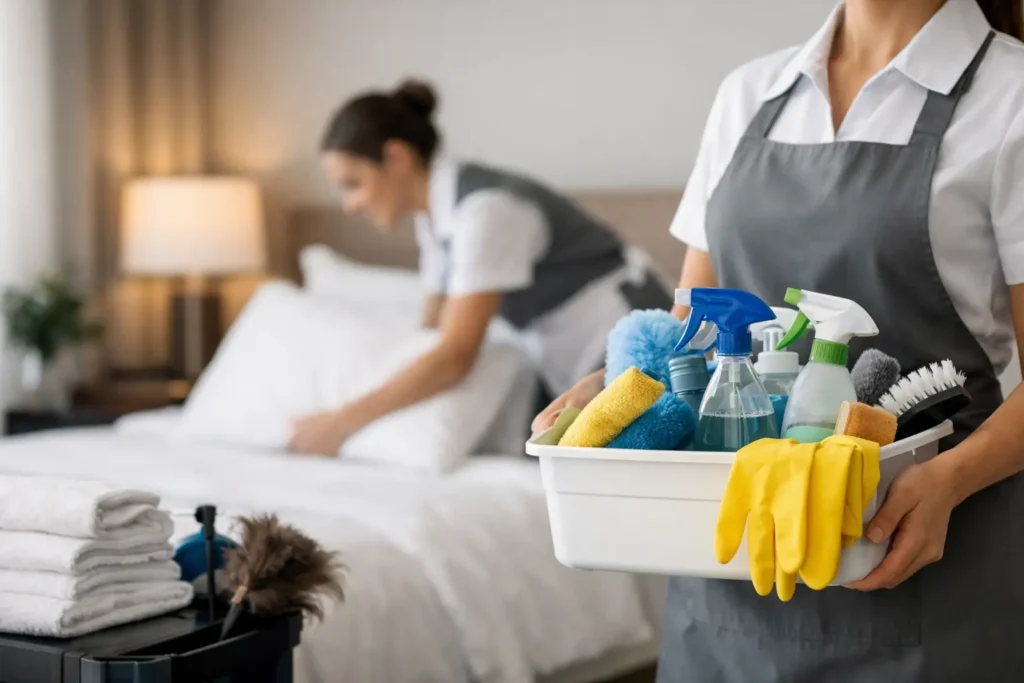
If you have ever booked a cleaning service and still wondered what is included in housekeeping, you are not alone. A lot of people hear the word housekeeping and assume it means everything gets cleaned, organized, and reset from top to bottom. In reality, housekeeping usually follows a clear scope, and knowing that scope upfront helps you avoid surprises.
Housekeeping is generally meant to keep a home or workspace clean, orderly, and manageable on an ongoing basis. It focuses on the tasks that make the biggest difference in day-to-day comfort – wiping surfaces, cleaning bathrooms, tidying rooms, vacuuming, mopping, and taking care of the spaces people use most. The exact details can vary by company, by visit type, and by the condition of the property.
That is why the best housekeeping services are specific. Vague promises sound nice, but clear task lists are what help customers know what they are paying for.
What is included in housekeeping for most homes?
For most residential customers, housekeeping covers the routine cleaning tasks that keep the home looking cared for between deeper cleanings. It is less about restoration and more about maintenance. If your home is already in fairly good shape, housekeeping helps it stay that way.
In the kitchen, housekeeping usually includes wiping countertops, cleaning the outside of appliances, spot-cleaning cabinet fronts, scrubbing the sink, and cleaning visible surfaces like the stovetop and backsplash. Floors are typically swept and mopped, and trash may be taken out if that is part of the service. Some providers will also wipe tables, chairs, and microwave exteriors.
In bathrooms, the standard work is more detailed because hygiene matters most there. That often means cleaning and disinfecting toilets, sinks, counters, mirrors, tubs, and showers. Fixtures are wiped down, floors are cleaned, and visible buildup is addressed. If soap scum or hard water stains are severe, that may move into deep cleaning territory rather than standard housekeeping.
Bedrooms usually get a lighter touch unless you request more. Common tasks include dusting reachable surfaces, making beds, straightening the room, vacuuming rugs or carpet, and cleaning floors. Some housekeeping services include changing bed linens if fresh sheets are left out, while others treat that as an add-on.
Living rooms, dining rooms, hallways, and other common areas are generally dusted and tidied. Tables, shelves, window sills, and other reachable surfaces are wiped or dusted, floors are vacuumed or mopped, and cushions may be straightened. The goal is to make the space look clean, feel fresh, and stay comfortable for everyday use.
What housekeeping usually does not include
This is where expectations matter most. Housekeeping is not always the same as deep cleaning, decluttering, laundry service, or move-out cleaning. Many customers assume tasks are included because they seem related, but in practice they may be separate.
For example, inside ovens, inside refrigerators, inside cabinets, interior windows, baseboard scrubbing, wall washing, and heavy buildup removal are often not part of standard housekeeping. The same goes for post-construction cleanup, hoarding conditions, biohazard situations, or lifting and moving heavy furniture.
Organization is another area where it depends. Basic tidying is commonly included, but detailed organizing – like sorting closets, arranging paperwork, or managing storage systems – is usually a separate service. Laundry and dishwashing can go either way. Some housekeeping plans include light help with these tasks, while others stay focused on surface cleaning only.
The reason for these limits is simple. Time, labor, and condition all affect the visit. A recurring housekeeping visit is priced and scheduled differently from a first-time reset or a deep clean.
Standard housekeeping vs. deep cleaning
If you are comparing services, this is one of the most useful distinctions to understand. Standard housekeeping is built for upkeep. Deep cleaning is built for detail.
A standard housekeeping visit targets the visible mess and routine grime that build up during normal living. It is what keeps bathrooms sanitary, kitchens presentable, floors clean, and surfaces under control. This is the right fit for homes that are already being maintained on a regular basis.
Deep cleaning goes further. It often includes hand-wiping baseboards, cleaning behind or under light furniture when accessible, removing heavier buildup in bathrooms and kitchens, dusting neglected areas, and paying more attention to edges, corners, vents, trim, and fixtures. Deep cleaning is a good option if it has been a while since the home was professionally cleaned, or if you want a stronger reset before starting recurring service.
Neither option is better in every situation. It depends on the condition of the property and what result you need. If your home is mostly tidy but you are short on time, standard housekeeping may be enough. If grime has built up over months, a regular visit may not go far enough.
What is included in housekeeping for recurring service?
Recurring housekeeping is often the most practical choice for busy households because it keeps cleaning from turning into a bigger project. Weekly, biweekly, or monthly visits usually follow a repeatable routine based on your priorities.
In recurring service, the tasks are often similar from one visit to the next: kitchens cleaned, bathrooms sanitized, bedrooms straightened, common areas dusted, and floors vacuumed or mopped. Because the space is being maintained regularly, cleaners can usually spend less time catching up and more time delivering consistent results.
This is also where customization matters. Some clients want extra attention on bathrooms every visit. Others care most about pet hair, kitchen upkeep, or guest-ready common areas. A dependable housekeeping service should be able to adjust the plan without making the process complicated.
For families, recurring housekeeping can reduce stress fast. For renters and property managers, it helps maintain the condition of the space. For small business owners, it keeps offices, break rooms, and restrooms clean without pulling staff away from work.
How condition and access affect the task list
Two homes can book the same housekeeping service and need very different amounts of work. That is why exact inclusions sometimes depend on the condition of the property, the number of rooms, and how accessible the surfaces are.
If countertops are covered with personal items, cleaners may clean around them rather than fully clear and wipe every inch. If a shower has months of mineral buildup, normal bathroom cleaning may improve it without fully restoring it. If a room is heavily cluttered, the service may focus on what can be safely and reasonably reached.
Pets, children, and high-traffic living also change the pace of a visit. More footprints, more crumbs, more fingerprints, and more hair mean more maintenance. That does not mean housekeeping will not work well. It just means the plan should match the reality of the home.
Questions worth asking before you book
If you want to know exactly what is included in housekeeping, ask for the task list before scheduling. A trustworthy company should be comfortable spelling out what is covered in kitchens, bathrooms, bedrooms, and common areas.
It also helps to ask what is considered extra, whether supplies are included, whether you can request eco-friendly products, and how first-time visits differ from recurring visits. If you need help with laundry, dishes, bed changes, or inside-appliance cleaning, bring that up early. Small details can affect timing and price.
Clear communication matters just as much as the cleaning itself. You should know what to expect, when the team is arriving, and how to request changes if your needs shift. That is one reason many customers prefer local companies with flexible scheduling and direct phone or text communication, like All Fresh Cleaning Services.
The real value of housekeeping
Housekeeping is not just about having a cleaner-looking space. It is about reducing the mental load that comes with trying to stay on top of everything yourself. When the bathrooms are handled, the floors are clean, and the kitchen has been reset, the whole place feels easier to live in.
For some customers, housekeeping is a weekly necessity. For others, it is help during a busy season, after guests, before a move, or when work and family schedules get packed. There is no single right way to use it. The key is choosing a service with a clear scope, dependable follow-through, and enough flexibility to match your space.
A good housekeeping service should leave you with fewer chores, less stress, and a home that feels cared for – not a list of surprises after the crew is gone.