
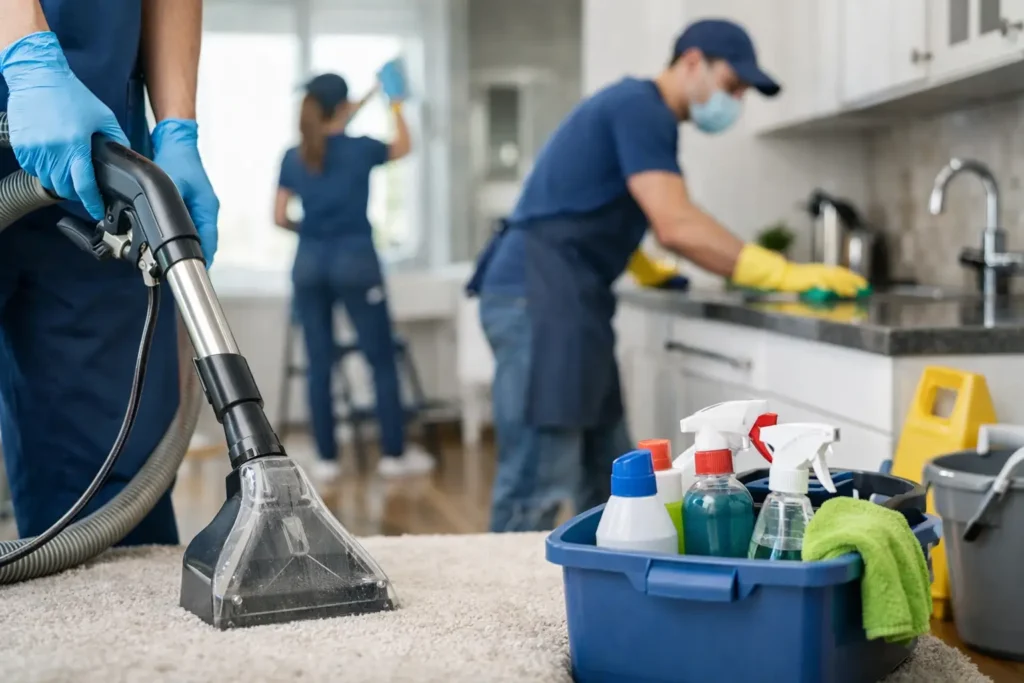
If you have ever looked around your home or office and thought, “It’s clean enough, but it still doesn’t feel clean,” that is usually where deep cleaning comes in. When people ask what does deep cleaning include, they are usually trying to figure out the difference between a surface-level clean and a more thorough service that resets the space.
A deep clean goes beyond the basics. It focuses on the buildup, dust, grime, and overlooked areas that regular upkeep does not always catch. That can make a big difference before guests arrive, after a busy season, during a move, or when a property simply needs more attention than a routine visit can provide.
What does deep cleaning include in most homes?
In most cases, deep cleaning includes the standard tasks you would expect, plus extra detail work. That means floors are not just vacuumed or mopped. Baseboards, corners, edges, and buildup around surfaces get more attention. Counters are wiped as usual, but so are backsplashes, cabinet fronts, light switches, door frames, and other high-touch or often-missed areas.
The exact scope depends on the provider, which is why clear task lists matter. Some companies use the phrase “deep cleaning” loosely. A dependable service should explain exactly what is included room by room, so you know what you are paying for and what to expect when the crew arrives.
Kitchen deep cleaning tasks
The kitchen is usually one of the biggest parts of a deep clean because it collects grease, crumbs, fingerprints, and hidden buildup fast. A deeper service often includes scrubbing countertops, cleaning backsplash areas, wiping cabinet exteriors, spot-cleaning cabinet fronts, and removing grime around handles and switches.
Appliance exteriors are usually cleaned, including the refrigerator, oven, microwave, and dishwasher. Many deep cleans also include cleaning the inside of the microwave and wiping the visible areas around and under small appliances if they are accessible. Sinks get more than a quick rinse. They are scrubbed, polished when appropriate, and cleaned around the faucet where residue tends to collect.
Floors get extra attention too. Instead of just a quick pass, corners, edges, and buildup near baseboards are addressed. If a kitchen has not had detailed attention in a while, this alone can change how the whole room feels.
Bathroom deep cleaning tasks
Bathrooms are another area where deep cleaning stands out. A regular clean may keep things usable, but a deep clean targets soap scum, hard water marks, grime around fixtures, and buildup in areas that are easy to ignore week to week.
This often includes scrubbing tubs, showers, tile, shower doors, sinks, toilets, counters, mirrors, and faucet areas. Many services also wipe cabinet exteriors, sanitize high-touch points, and clean around the base of the toilet where dust and residue can build up. If there are vents, baseboards, or shelving, those may be included as well.
There is one trade-off worth mentioning. Deep cleaning can improve a bathroom dramatically, but it does not reverse permanent staining, old caulk damage, rust, or worn grout. If buildup is the issue, cleaning helps. If the material itself is damaged, that is a repair issue rather than a cleaning issue.
Bedrooms and living areas
In bedrooms, living rooms, hallways, and common spaces, deep cleaning usually means more than dusting visible furniture and vacuuming the middle of the floor. It often includes dusting reachable surfaces thoroughly, wiping baseboards, cleaning window sills, spot-cleaning doors and frames, and removing dust from blinds, ceiling fans, and light fixtures when accessible.
Furniture may be dusted more carefully, and floors are cleaned with more detail along edges, under reachable furniture, and in corners. In homes with pets, kids, or high traffic, these areas can hold a surprising amount of dust and debris even when the space looks tidy at first glance.
What deep cleaning usually does not include
This is where customers can get frustrated if expectations are not clear upfront. Deep cleaning is thorough, but it is not the same as decluttering, damage repair, or restoration work.
Most deep cleaning services do not automatically include laundry, dishes, heavy organizing, mold remediation, biohazard cleanup, exterior window washing, carpet shampooing, or lifting and moving heavy furniture. Some companies offer add-ons for tasks like inside oven cleaning, inside refrigerator cleaning, interior windows, or detailed wall washing. Others build some of those tasks into the service.
That is why the best approach is to ask for a written scope or checklist. A clear estimate protects both sides. You know what is being done, and the cleaning team can plan the right amount of time for the job.
When a deep clean makes the most sense
Deep cleaning is not always something you need every week. For many people, it works best as a starting point. If a home has been maintained loosely, or if you are hiring a cleaning service for the first time, a deep clean creates a strong baseline. After that, regular cleaning visits are easier and more cost-effective because the home is already in better shape.
It also makes sense before hosting family, after a renovation, during seasonal resets, before a baby arrives, after illness, or when moving in or out. Property managers often request deep cleaning between tenants because surface cleaning is usually not enough for turnover.
For commercial spaces, it depends on traffic and use. A small office may only need occasional deep cleaning in addition to regular service. A customer-facing business, shared workspace, or breakroom-heavy office may need it more often because grime builds faster.
How deep cleaning compares to standard cleaning
A standard cleaning is built for upkeep. It helps maintain a reasonably clean space by handling recurring tasks like dusting, wiping surfaces, vacuuming, mopping, and cleaning bathrooms and kitchens at a general level.
A deep clean is more detailed and more labor-intensive. It targets neglected areas, built-up grime, and detail work that takes extra time. That is why it usually costs more than a standard cleaning and may take significantly longer, especially in homes with pets, children, or a long gap since the last professional service.
That does not mean every home needs the same level of deep cleaning. Some spaces need only a moderate reset. Others need a full top-to-bottom effort. A trustworthy company will be honest about that rather than upselling work you do not need.
What to ask before booking a deep cleaning
If you are comparing services, do not stop at the phrase “deep cleaning.” Ask what rooms are covered, whether baseboards and high-touch areas are included, whether appliance interiors cost extra, and whether the team brings supplies. Ask how long the job usually takes and whether the quote is flat-rate or based on condition.
It also helps to ask how the company handles satisfaction concerns. Cleaning is detail work, and clear communication matters. A service that stands behind its work, offers transparent estimates, and explains the task list in plain language is usually the safer choice.
Companies like All Fresh Cleaning Services earn trust by being specific. Customers should not have to guess what “deep cleaning” means or wonder whether key areas were supposed to be included.
What does deep cleaning include for move-ins and move-outs?
Move-related cleaning often overlaps with deep cleaning, but it can go even further. Empty properties make it easier to reach inside cabinets, closets, and corners, so the scope is often more detailed. This may include wiping out drawers and shelves, cleaning inside appliances if requested, removing dust from trim and ledges, and giving bathrooms and kitchens extra attention before the next occupant arrives.
If the property is still furnished, the cleaning may be slightly different. Access changes what can realistically be cleaned. That is another reason why customized estimates matter. The best plan depends on whether the home is occupied, vacant, lightly used, or in rough shape after a move.
A good deep clean should leave the space feeling reset, not just picked up. If you are paying for the service, you deserve to know exactly what is included, what costs extra, and what results are realistic. The clearer the scope, the better the outcome and the less stress for everyone involved.