
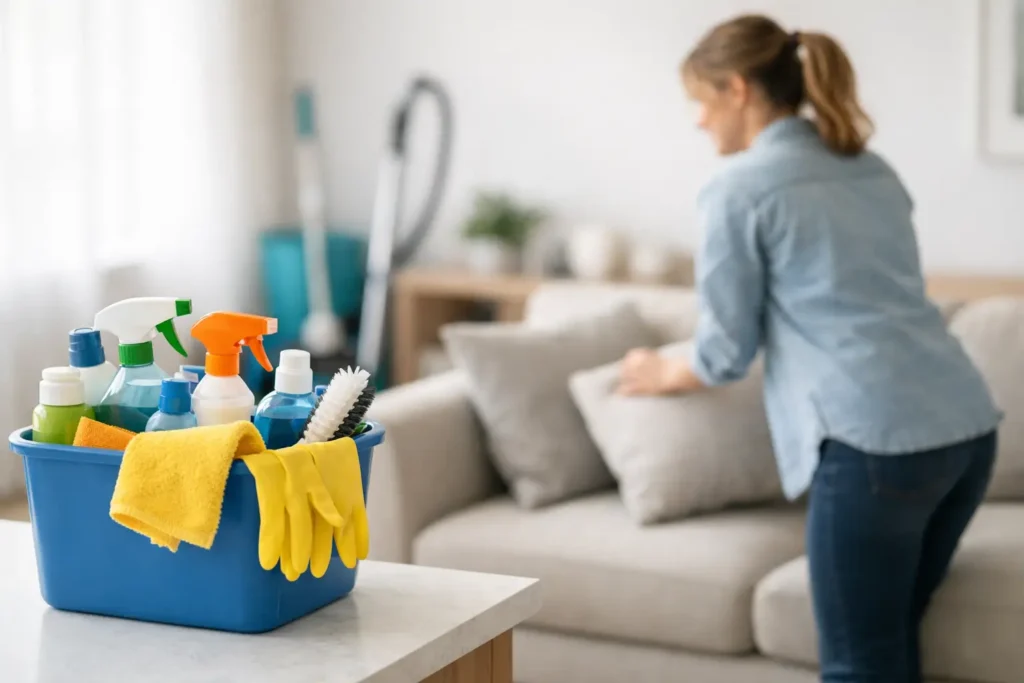
A cleaning appointment should make your day easier, not create another project to manage. Knowing how to prepare for cleaners helps the team spend their time where it matters: cleaning your kitchen, bathrooms, bedrooms, and common areas instead of moving piles, searching for supplies, or waiting for access.
You do not need a spotless home before a professional cleaning visit. That defeats the purpose. A few practical steps, however, can protect your belongings, clarify your priorities, and help you get the best result from the service you booked.
Confirm the Scope Before the Appointment
Start by making sure everyone has the same expectations. A standard recurring cleaning, a deep cleaning, and a move-in or move-out cleaning can look very different. The right preparation depends on the service, the condition of the space, and any add-ons you requested.
Review the task list or estimate before the appointment. Check which rooms are included and whether services such as inside-the-oven cleaning, inside cabinets, interior windows, laundry, pet hair removal, or refrigerator cleaning are part of the plan. If something is especially important to you, mention it ahead of time rather than assuming it is included.
This is also the time to speak up about areas that need extra attention. Maybe the primary bathroom has hard-water buildup, the kitchen floor needs more work after a busy week, or a vacant property has construction dust in the closets. Clear direction helps the cleaning team bring the right approach and manage time appropriately.
For move-related cleaning, make sure the property is truly ready. Most move-out and move-in services work best after personal belongings, boxes, furniture, and trash have been removed. Cleaners can clean empty cabinets, baseboards, appliances, and floors much more thoroughly when those surfaces are accessible.
Tidy Up, But Do Not Pre-Clean
There is a difference between tidying and cleaning. Your cleaners are there to handle the dusting, scrubbing, vacuuming, mopping, and detail work. You do not need to wipe counters or clean toilets before they arrive.
What helps is clearing everyday clutter from the surfaces and floors they need to reach. Put away loose paperwork, clothes, toys, shoes, mail, and small household items. If a countertop is covered with appliances, packages, and personal items, it may be difficult to clean fully without moving things that could be fragile or important.
A quick reset makes a real difference:
- Pick up items from floors, stairs, sofas, and beds.
- Clear kitchen and bathroom counters as much as possible.
- Put dirty dishes in the dishwasher or let the team know if dishwashing is part of your service.
- Empty overly full trash bins if your service does not include trash removal.
- Move laundry from floors or bathroom surfaces into a hamper.
This is not about making your home look presentable for the cleaners. It is about giving them safe, open access to the areas you want cleaned. If clutter is part of the job, ask about adding organizing or pickup time so the estimate and expectations stay fair.
Secure Valuables, Medication, and Private Documents
Professional cleaners respect your home, but it is always smart to put away items you would not want moved, misplaced, or left in plain sight. Store cash, jewelry, prescription medication, firearms, important documents, checkbooks, sensitive work materials, and sentimental items in a secure place before the visit.
This protects your privacy and removes uncertainty for everyone. It also prevents cleaners from needing to decide whether an item is safe to move, clean around, or leave untouched.
If you have a home office, decide how you want it handled. You may want general dusting and vacuuming but prefer that desks, filing areas, or computer equipment remain undisturbed. Let the team know. The same goes for display shelves, collections, or furniture with fragile pieces.
Make Access Simple and Safe
A cleaning team cannot do great work if they cannot get in, park, or move safely through the space. Confirm access instructions before the appointment, especially if you will not be home.
If you use a key, lockbox, garage code, door code, front desk, or property manager, provide clear instructions and test them in advance. Include any details that could prevent delays, such as a gate code, building number, elevator requirements, or a specific entrance.
For apartments and commercial spaces, ask about parking. If visitor parking is limited, reserved, or paid, tell the cleaning company where to park and whether validation or permits are needed. A few minutes of confusion at arrival can take time away from the service itself.
Inside the property, make pathways clear. Secure loose rugs, cords, and slippery entryways. If there are maintenance issues such as a leaking sink, broken toilet, loose tile, or nonworking electrical outlet, mention them before the team starts. Cleaners can work around some issues, but they should not be expected to handle unsafe conditions or repairs.
Plan for Pets and Household Activity
Pets are part of the family, and most cleaners are happy to work in pet-friendly homes. Still, a cleaning visit can be noisy and unfamiliar for animals. Vacuums, mops, open doors, and new people moving between rooms may make even calm pets anxious.
If possible, keep pets in a comfortable separate room, crate, yard, or with a trusted person during the appointment. This helps prevent stress, escape risks, and interruptions. Be sure to tell the team if a pet will be in the home, particularly if it is protective, nervous, or has special handling needs.
Consider household schedules, too. If someone works from home, has a baby who naps at a certain time, or needs quiet for a meeting, communicate that beforehand. Cleaners can often work around reasonable preferences, but they need to know what is realistic. A full-home cleaning naturally involves vacuuming and moving room to room.
Share Your Priorities Without Micromanaging
The best cleaning plans are specific without being complicated. Before the appointment, identify your top two or three priorities. You might say, “Please focus on the showers and kitchen floors,” or “The guest room does not need much attention, but the living room does.”
This is especially helpful for a one-time cleaning, a first visit, or a home with limited time booked. Not every condition can be solved in one appointment, particularly when there is heavy buildup, pet hair, or a large property. Clear priorities help the team use the available time wisely.
At the same time, avoid changing the full scope at the door. Asking for additional rooms, detailed appliance cleaning, or major organizing after the team arrives may require more time and an updated estimate. Honest communication before the appointment is the simplest way to keep pricing transparent and prevent disappointment.
If you have product preferences, allergies, fragrance sensitivities, or a request for eco-friendly cleaning options, mention those in advance. Some surfaces also need special care. Natural stone, unfinished wood, delicate metals, and specialty finishes should be identified so cleaners can use appropriate methods.
Prepare Bathrooms and Kitchens for Better Results
Bathrooms and kitchens usually need the most hands-on work, so small preparation steps can help. In the bathroom, remove personal grooming items from the shower ledge, vanity, and tub if you want those areas cleaned thoroughly. Put toothbrushes, contact lens cases, razors, and cosmetics away.
In the kitchen, clear food from counters and put away open items. If you want the inside of the refrigerator cleaned, remove perishable food or confirm how you want it handled. For oven cleaning, let the team know about any self-cleaning cycle, manufacturer instructions, or surface concerns.
Do not worry about normal messes. Crumbs, soap residue, fingerprints, and everyday grime are exactly what cleaning services are for. The goal is simply to make surfaces reachable and avoid leaving cleaners to guess what should be kept, moved, or discarded.
What Not to Expect From a Cleaning Visit
Clear expectations protect both your home and your budget. Cleaning professionals are not usually able to lift extremely heavy furniture, handle pest infestations, remove hazardous waste, repair damage, climb beyond safe reach, or deal with bodily fluids without prior notice and proper arrangements.
They also cannot guarantee the removal of every stain, scratch, rust mark, or permanent buildup. Some surfaces may be damaged, aged, or beyond what standard cleaning products can safely correct. A dependable company will be upfront about those limits rather than promising results that are not realistic.
If the home has not been cleaned in a long time, a deep cleaning may be the better starting point before setting up recurring service. Once the home is brought to a manageable baseline, regular cleaning becomes more efficient and easier to maintain.
Be Available for Questions, Then Let the Team Work
A quick walkthrough at the beginning can be useful, particularly for a first appointment or move-related clean. Point out priorities, answer access questions, and mention anything the cleaners should avoid. After that, give the team room to work.
If you will be away, keep your phone nearby in case a question comes up. Direct communication by call or text can prevent small issues from becoming bigger ones. At the end of the visit, take a few minutes to look over the work while the team is still available. If something was missed, raise it promptly so it can be addressed.
A well-prepared cleaning visit is not about perfection before anyone arrives. It is about making space for dependable work, clear communication, and a home or business that feels genuinely cared for when the job is done.